 how-to
Why Is My Water Bill So High? Find Hidden Leaks Fast
Table of Contents
- Common Reasons Your Water Bill Spikes
- How to Read Your Water Meter for Leaks
- How to Check for a Silent Toilet Leak
- Signs of a Burst Pipe Behind Walls
- Outdoor Irrigation and Seasonal Water Usage Patterns
- When to Call a Professional for Leak Detection
- Frequently Asked Questions
Last Updated: September 30, 2026
Common Reasons Your Water Bill Spikes
If you're asking why is my water bill so high, the answer usually comes down to one of a handful of culprits: a hidden leak, a running toilet, old fixtures, outdoor watering, or more people using the water. But before you start hunting for leaks, it's worth reading the bill itself. A surprising number of high bills are not caused by water use at all, they're caused by how the charges are structured, when the meter was read, or a plain billing error.
Reading your bill: water usage vs. sewer charges
Most residential bills in Canada split into at least two lines: a water consumption charge and a sewer (or wastewater) charge. The sewer charge is often calculated as a percentage of your water use, commonly somewhere between 70% and 100%, because most of the water that comes in through the meter is assumed to go back out through the drain.
Other line items you may see:
- A fixed service or meter charge, billed regardless of use
- A stormwater or drainage fee, often based on property size, not consumption
- Tiered or block rates, where the price per cubic metre rises after a threshold
- A fire protection or infrastructure levy
Spotting billing errors and meter-reading mistakes
Utilities estimate readings when a meter can't be accessed, then true up later. If you were estimated low for several cycles and then got an actual read, the catch-up bill can look alarming even though nothing leaked. Look for words like "estimated" or "actual" on the statement, and compare the read dates to your normal cycle.
Other common errors:
- A misread digit on a manual meter
- A transposed address or a shared meter for a duplex or laneway unit
- A rate change applied retroactively
- A leak adjustment credit you were entitled to but never received
Hidden leaks behind walls and under floors
Leaks you can't see are the most expensive kind. Water escapes slowly, so you never notice a puddle, but your meter keeps spinning. A pinhole leak in a supply line can waste water around the clock.
Watch for these signs:
- Damp or discolored patches on walls and ceilings
- A musty smell in one room
- Paint or wallpaper that bubbles or peels
- The sound of running water when nothing is on
- Warm spots on the floor (a sign of a hot water line leak)
Running toilets and worn flapper valves
A running toilet is the single most common cause of a high water bill, and it's usually the cheapest to fix. The flapper valve sits at the bottom of the tank and seals water in. When it warps or wears out, water trickles into the bowl nonstop.
Increased occupancy and seasonal patterns
Household size is the most overlooked variable. A returning student, a new roommate, or a home-based business with regular laundry can shift consumption by a noticeable margin without any leak at all. Compare your bill to the same month last year rather than to last month, seasonal swings from irrigation, pool top-ups, and holiday guests can easily double summer use in some households.
How to Read Your Water Meter for Leaks
The fastest way to confirm a leak is to read your water meter. Turn off every tap and appliance in the house, then watch the meter's leak indicator or low-flow dial. If it moves, water is escaping somewhere. But the real value is in the math that follows: once you know how fast water is moving, you can estimate what it's costing you and decide how urgently to act.
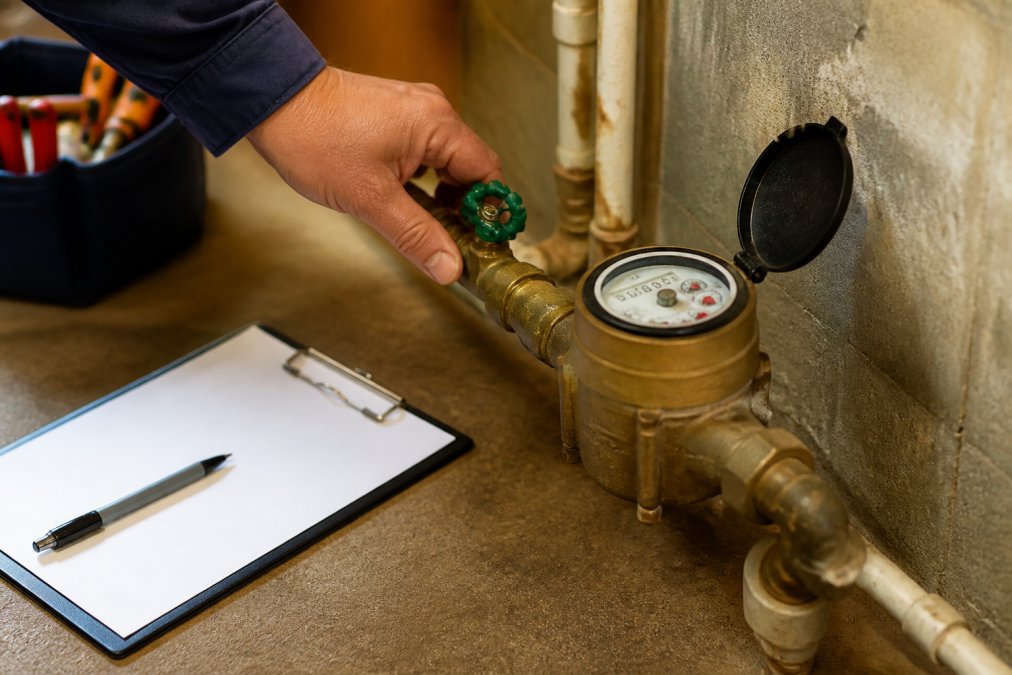
Here's the step-by-step process:
- Shut off all water inside and outside the house, taps, dishwasher, washing machine, ice maker, humidifier, and any irrigation zone.
- Find your main water valve and confirm it's fully open. A partially closed valve can distort readings.
- Locate the meter, usually in the basement, a utility closet, or a meter pit near the property line.
- Watch the small leak indicator (often a triangle or a low-flow dial) for one to two minutes. If it spins or moves, you have a leak.
- For a precise measurement, write down the exact reading, wait two hours without using any water, then read it again.
Turning the reading into a leak rate
Most residential meters in Canada measure in cubic metres (m³), and 1 m³ equals 1,000 litres. If your meter advanced by 0.05 m³ over two hours, that's 50 litres in two hours, or about 25 litres per hour. Multiply by 24 and you get roughly 600 litres per day, enough to fill several bathtubs and a strong signal that something is running continuously.
Isolating where the leak is
Once you've confirmed water is moving, the next question is where. Close the main shut-off valve inside the house and watch the meter again:
- If the dial stops when you close the main valve, the leak is inside your home, toilets, supply lines, appliances, or fixtures.
- If it keeps moving with the indoor valve closed, the problem is on the service line between the meter and your house. That's typically the utility's or municipality's responsibility up to the property line, and yours beyond it, so check your local bylaws before digging.
Reading the meter over a full day
For a more reliable picture, take a reading at the same time on two consecutive days when no one is home and no irrigation is running. The difference is your true baseline standby use. Most households with no leaks show zero or near-zero movement overnight. Anything above that is worth chasing.
How to Check for a Silent Toilet Leak
A silent toilet leak hides in plain sight, and it's the number one reason a bill climbs without any obvious cause. The test takes about 15 minutes and needs nothing but food coloring or a dye tab.
Follow these steps:
- Lift the tank lid and set it aside safely.
- Drop in dye or a leak-detection tab.
- Wait 15 minutes. Do not flush.
- Look in the bowl. Color means the flapper is leaking.
- Check the water level too. It should sit about 2.5 cm below the overflow tube.
- If the level is too high, adjust the fill valve.
Signs of a Burst Pipe Behind Walls
A burst pipe behind a wall announces itself in ways you can see, smell, and hear. Catch these signs early and you can shut off the water before the damage spreads.
Look for:
- Water stains that grow larger over days
- A hissing or dripping sound inside a wall
- Bulging or soft drywall
- A sudden drop in water pressure
- Unexplained mold or mildew
Outdoor Irrigation and Seasonal Water Usage Patterns
Outdoor watering drives most seasonal spikes, and it's easy to miss a leak in an irrigation system. A broken sprinkler head or a cracked line can soak a lawn without you noticing.
Check your system each spring:
- Walk the yard while each zone runs
- Look for soggy patches or unusually green spots
- Check sprinkler heads for cracks or clogs
- Inspect the backflow device and valves
- Watch the meter while the system is off
When to Call a Professional for Leak Detection
Some leaks are easy to fix yourself. Others need tools and training you don't have. Call a professional when the meter keeps moving after you've ruled out toilets and outdoor lines, when you see water damage inside a wall, or when the leak is on the service line.
Frequently Asked Questions
What is the most common reason for a high water bill?
A running toilet is the most common culprit. A worn flapper valve can waste hundreds of litres per day without making noise. Other frequent causes include hidden leaks behind walls, dripping outdoor sprinkler heads, and old fixtures like high-flow showerheads. Start by checking your water meter with all taps off. If it still moves, you have a leak somewhere in the system.
How can I tell if I have a hidden water leak?
Turn off every water-using appliance and fixture in your home. Locate your main water valve and shut it off completely. Check your water meter. If the dial or digital display continues to move, water is escaping somewhere between the meter and your home. This points to a service line leak or a burst pipe behind walls. Call a plumber for leak detection.
Can I dispute a high water bill with the municipality?
Yes, most municipalities allow you to request a billing review if you suspect a leak caused the spike. Contact your utility provider and explain the situation. Some offer leak adjustment programs that reduce sewer charges when you can prove the excess water never entered the sewer system. You will typically need a plumber's invoice showing the leak was repaired. Act quickly, as time limits apply.
How do I check my water meter for a silent leak?
Shut off all water inside and outside your home. Find your water meter, usually in the basement or utility room. Watch the leak indicator, a small triangle or dial. If it spins, water is moving through the meter. Note the reading, wait one hour without using any water, then read it again. Any change confirms a leak. This method works for both hidden leaks and running toilets.
A high water bill is frustrating, but it's rarely a mystery once you know where to look. Start with the meter test and the toilet check, and you'll usually find the cause in under an hour. When the leak is hidden behind a wall or under the floor, Sherwood plumbing can locate it with professional leak detection, handle poly-b replacements, and repair water heater issues without guesswork. Let's get started.